
Last updated November 23, 2026
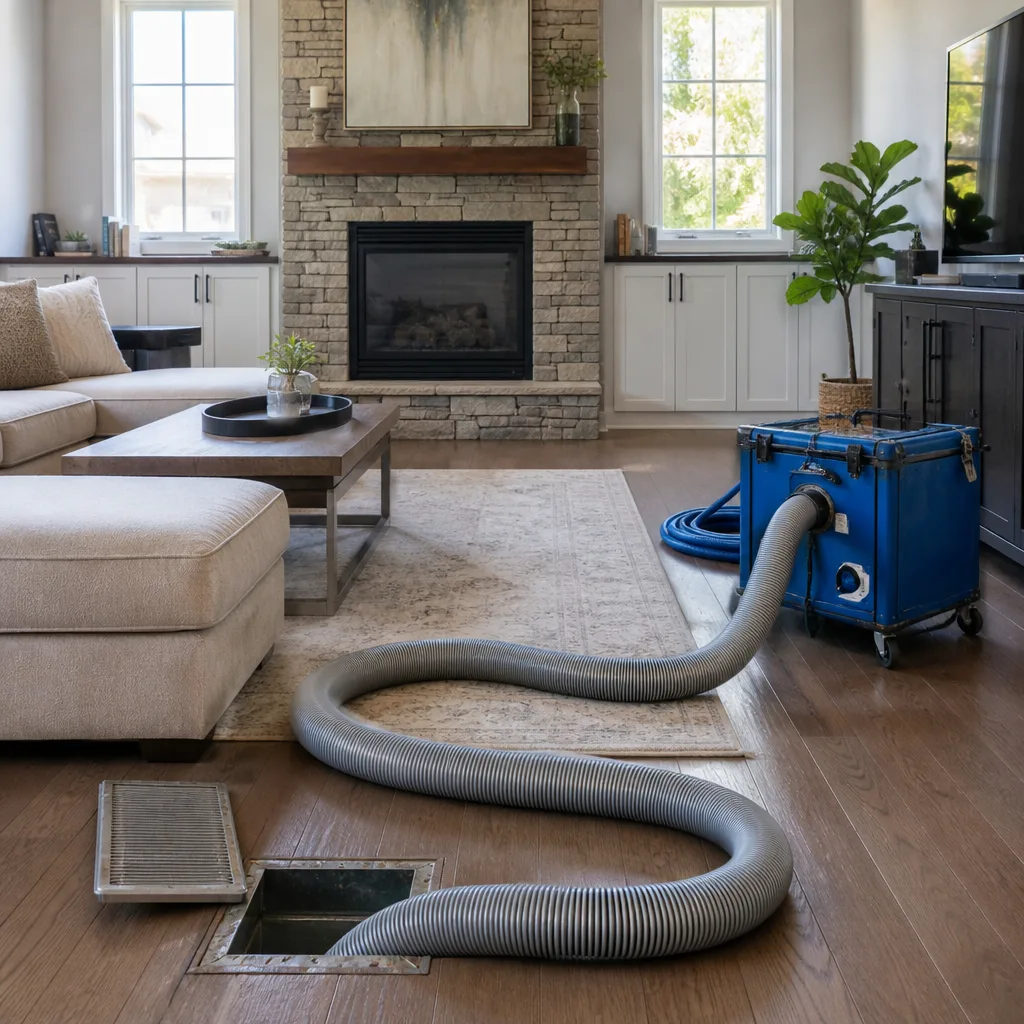 Whole-home duct cleaning
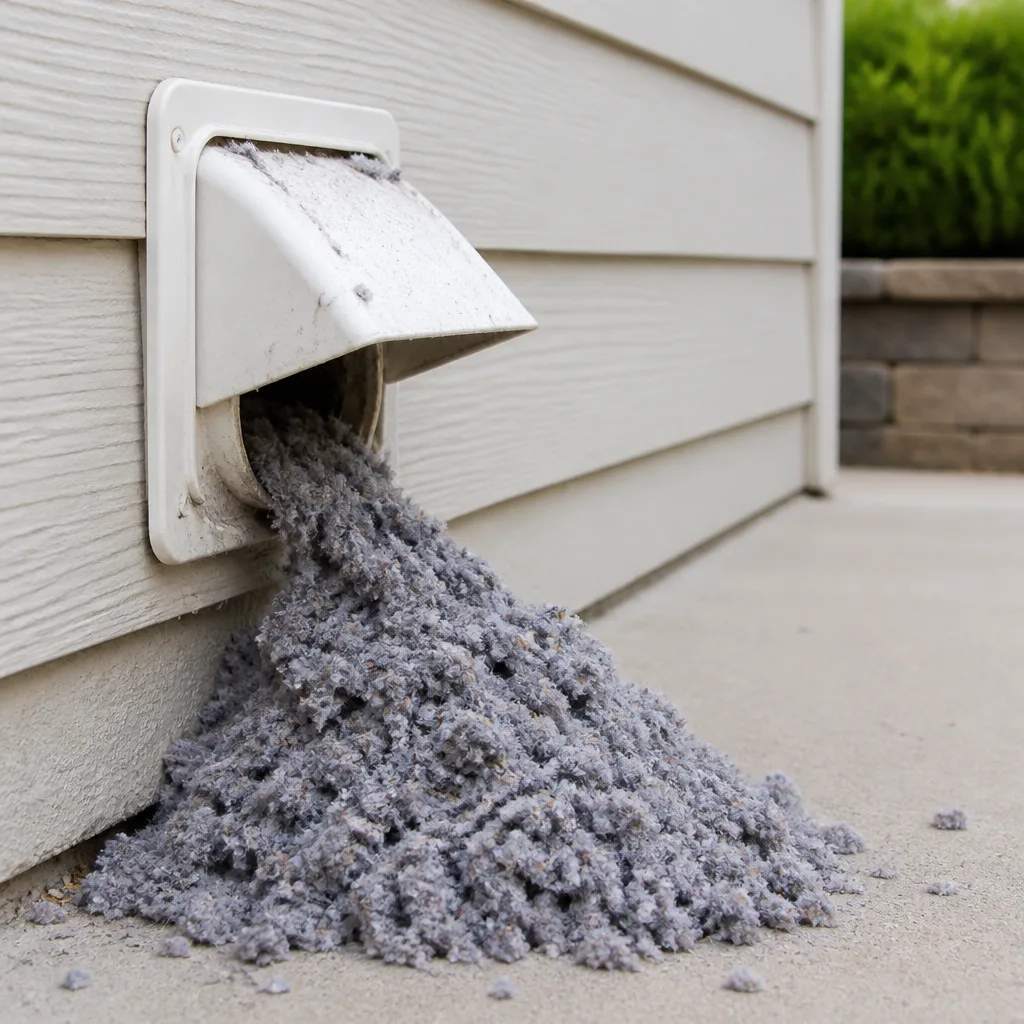 Dryer vent cleaning
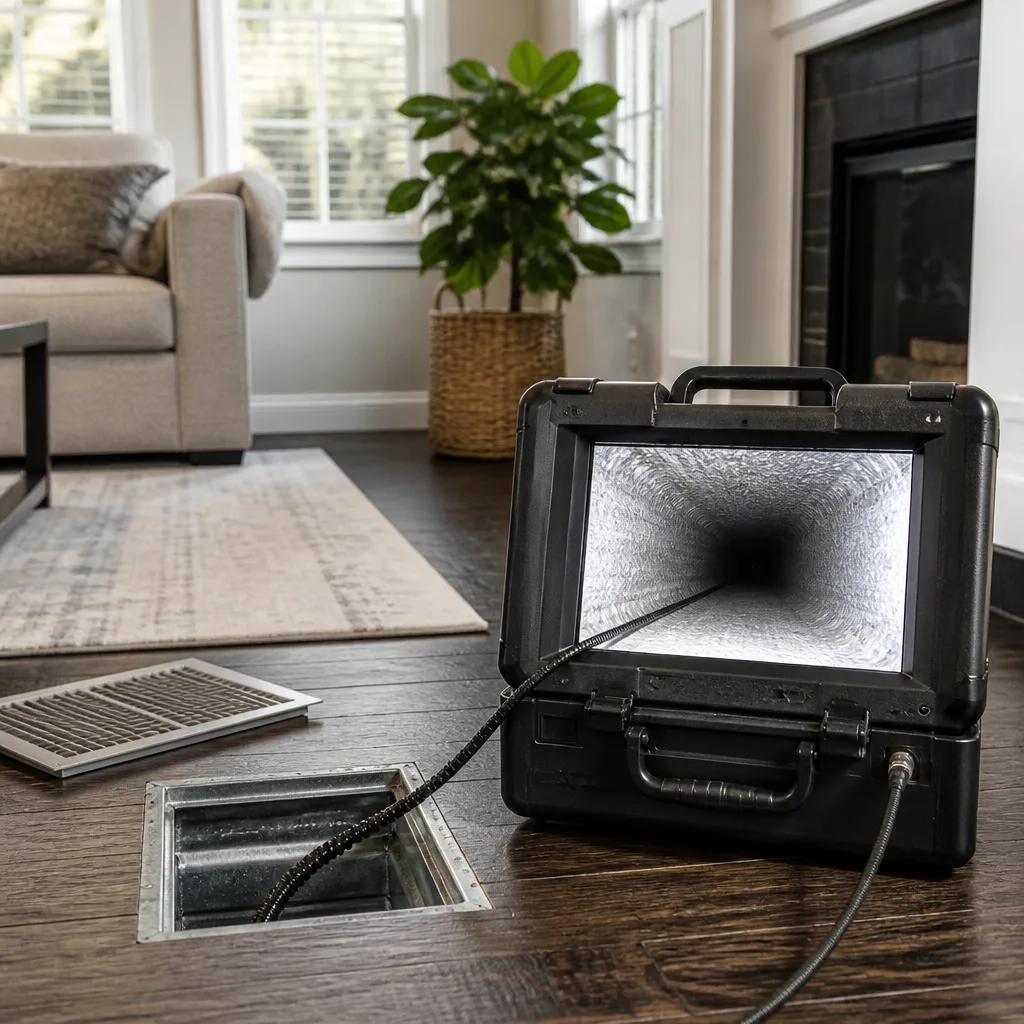 Camera inspection
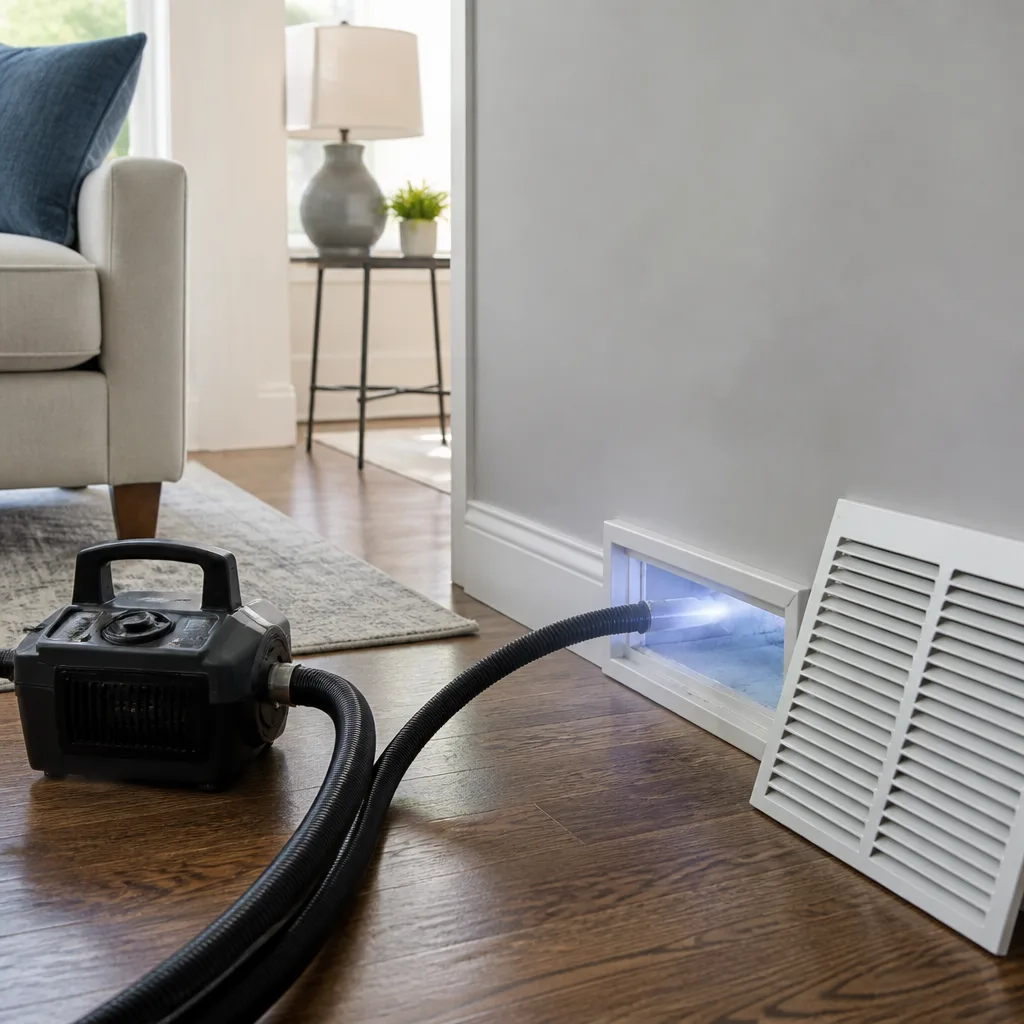 Sanitizing & deodorizing
Whole-system duct and dryer vent check with before-and-after photos - you see exactly what came out of your vents
That "$99 whole-house special" is a bait ad - the real number appears once they are in your hallway, or the "clean" is a shop-vac at the register. We photograph the inside of your ducts before and after instead.
How to Hire an Air Duct Cleaning Contractor in Arvada: A Step-by-Step Guide
A “$99 whole-house duct cleaning” flyer that lands in your Arvada mailbox is almost always priced below the cost of fuel and labor for a legitimate job. That math tells you everything about what you’re actually buying: a technician who’s on site just long enough to open a vent, wave a vacuum hose at the opening, and hand you an invoice before the next stop. The industry has earned a reputation for bait-and-switch pricing and incomplete work, and out-of-area companies running discount mailers lean on exactly that reputation. This guide teaches you to screen contractors on technical capability first – equipment, scope, and proof of completion – before price ever enters the conversation.
Quick Answer
Hire an air duct cleaning contractor in Arvada by screening on equipment and written scope before you ask for a price. Ask what machines they use, whether they pull negative pressure with containment, what brands they service, and what documentation you’ll receive afterward. A legitimate contractor puts every line item in a written scope and shows before-and-after photos of your own ducts. Then get a firm per-system price in writing and compare like for like.
Styles & brands we work with
- Whole-home duct cleaning
- Dryer vent cleaning
- Camera inspection
- Sanitizing & deodorizing
Table of Contents
- Why the Discount Mailer Math Fails
- The Five Equipment Questions to Ask Before You Book
- Why NADCA Membership and ACR Compliance Matter More Than a Generic BBB Rating
- How to Get a Scope of Work in Writing
- Verifying the Company Actually Services Arvada, Not Just Denver
- What Proof of Completion You Should Receive
- Duct Repair, Sealing, and Air Quality: The Parts Most Contractors Skip
- The Dryer Vent: A Core Service, Not an Upsell
Why the Discount Mailer Math Fails
A whole-house job takes a crew of two for several hours. Fuel, equipment depreciation, and labor all get paid before anyone earns a dollar of profit. A promotional price below that floor isn’t a bargain – it’s the opening line of a negotiation that only ends one way: with a bigger invoice once the technician is standing in your living room.
In our experience, the upsell usually arrives in the same visit. The technician “discovers” a problem that requires an add-on service you didn’t budget for. Or the original price only covered a set number of vents, and every vent beyond that gets charged separately. Either way you end up paying more than a straight quote would have cost – and often receiving less actual cleaning than you paid for.
Arvada’s older neighborhoods make this worse. Homes built in the mid-to-late 20th century frequently carry original sheet metal ductwork with flexible runs spliced in during an upgrade or two. A crew that isn’t set up to handle mixed duct systems will skim the accessible runs and skip the rest. You won’t see the difference until the next allergy season.
Here’s what this guide covers, in order: the equipment questions that separate serious contractors from coupon operations, the standards that actually mean something in this trade, how to get a real scope of work in writing, how to confirm the company services Arvada specifically, and what documentation you should walk away with when the job is done.
The Five Equipment Questions to Ask Before You Book
Ask these five questions before you book anyone. The answers tell you more about the quality of the job than any review or coupon ever will. A contractor who either doesn’t know the answers or avoids them is telling you something too.
- Truck-mounted or portable? Truck-mounted units (also called a mobile or van-mounted power unit) generate far more consistent suction over a long run than portable vacuums carried up the stairs. A portable unit can do a competent job on a short run, but once you’re more than a few feet from the machine, it loses pressure. Ask which they use, and if portable, ask how many CFM the unit actually produces at the hose end.
- What’s the CFM rating? CFM stands for cubic feet per minute – the volume of air the machine can move. Higher CFM means stronger vacuum at the duct opening. A legitimate contractor should be able to tell you what their machine is rated for without hesitation.
- What type of brush system do you use? Rotary brush systems use a spinning head and flexible cable to mechanically dislodge debris from duct walls. This matters because suction alone doesn’t lift accumulated dust – the brush has to break the film that’s bonded to the sheet metal. At Arvada Air Duct Cleaning Co, we rely on professional-grade brushes from Rotobrush and Nikro – equipment trusted in commercial and restoration settings because it works through the full length of a run, not just the first few feet.
- Can they inspect the interior with a camera before and after? A camera on a flexible reel can show you the inside of a duct before work starts and confirm the result when it’s done. If they don’t have one, they can’t prove anything.
- How are they setting up negative pressure? Negative pressure means the space being cleaned is held at lower pressure than the surrounding room, so airborne debris is drawn into the machine instead of into your house. This requires proper containment equipment. At our company, we use Abatement Technologies containment and filtration equipment specifically for this step.
Write the answers down. A contractor who handles all five with straight answers is worth a follow-up call. A contractor who deflects any of them just gave you a valuable piece of information.
Why NADCA Membership and ACR Compliance Matter More Than a Generic BBB Rating
A company’s BBB rating tells you whether they respond to customer complaints. It tells you almost nothing about whether they know how to clean ductwork. That’s why the National Air Duct Cleaners Association (NADCA) exists – it’s the trade body that established a formal standard for how the work should be done.
The ACR standard – Assessment, Cleaning, and Restoration – is the industry specification published by NADCA. It sets out what an assessment looks like, what equipment and methods are acceptable for the cleaning phase, and what restoration (sealing, repair, or replacement) should follow. A contractor who works to the ACR standard follows a defined process. A contractor who doesn’t is, by definition, making it up as they go.
You don’t need to read the full standard to use it. Ask three direct questions:
- Are you a NADCA member or does your crew follow the ACR standard in the NADCA guidelines?
- How do you assess the system before you clean it? (Legitimate answers include an interior camera inspection, airflow checks at the registers, and a review of any visible flex runs or duct transitions.)
- What restoration work do you offer if you find leaks, disconnected joints, or a broken flex line during the job?
The third question is the one most people skip and the one that matters most in Arvada. Homes here with aging flexible duct runs often have hidden disconnections where a length has fallen away from a fitting. Cleaning that run without repairing the connection leaves the problem in place.
A BBB rating is useful context. The NADCA standard is the standard the work should actually be held to.
How to Get a Scope of Work in Writing
Demand a written scope before anyone starts. A legitimate estimate includes line items, not a single lump sum. If the quote you’re given reads “$249 duct cleaning,” that’s not a scope – it’s a price sheet with no definition behind it.
A proper scope of work for a whole-home cleaning typically includes:
- Every supply run – the accessible runs that push conditioned air into each room.
- Every return run – the larger runs that pull air back to the air handler.
- The air handler and blower compartment – the air handler unit, its internal blower compartment, and the evaporator coil face (with a note on whether they work around or pull the coil).
- All registers and grilles – removed, cleaned, and reinstalled.
- Defined number of systems – you should know whether “one system” means one air handler or several.
- Duct repair or sealing – noted if needed, with a description of the work.
- Photo documentation – confirmed before work begins.
The single most useful thing in the scope is the definition of what counts as “one system.” A two-story Arvada home might run one air handler; a larger home or one with an addition could have two. Confirm how many systems you have, and confirm the price is for all of them – one flat price per system, agreed before work starts.
Ask whether the price covers the whole scope or whether anything is “per vent.” A legitimate estimate doesn’t piece the job apart per register – that’s how you get a $99 base price and a four-figure invoice. If you’re comparing several contractors, this article on air duct cleaning goes deeper on that scope comparison.
Verifying the Company Actually Services Arvada, Not Just Denver
A contractor driving in from Denver or farther out runs into three practical problems that affect your job directly. The first is response time when something doesn’t go right after the cleaning. A crew that’s already in Arvada on a follow-up visit can be back within a day. A company working from an hour away treats a callback as a scheduling problem.
The second is local knowledge. Arvada contains neighborhoods with very different housing stock. The older homes along Olde Town and up through the historic core often carry original metal ductwork with a few flexible splices. The newer builds west toward Candelas and northwest toward Leyden are more likely to have long flexible runs and tighter mechanical closets. The whole-home geometry between the two areas is different, and a crew that works here regularly knows the difference before they walk through the door.
The third is accountability. When work is booked through an out-of-area operation, follow-up questions often land in a phone room that has no record of your job beyond an address and a service code. Ask any contractor directly:
- How often do you work in Arvada, and what’s the drive time from where you start your day?
- Who do I call if there’s a problem two weeks after the job?
- Can you send me a recent before-and-after from an Arvada home? (You don’t need the customer’s name – just the proof the work was done here.)
If the answer to any of these is vague, that’s your answer. You want a company that knows Arvada’s housing on sight, not one that has to look it up.
What Proof of Completion You Should Receive
The single best defense against incomplete work is before-and-after photo documentation of your own ducts, not stock images. You should receive that documentation on the day of the job.
Get this in writing before anyone starts. A contractor who won’t agree to it up front is telling you they either don’t plan to take photos or don’t plan to show them. Here’s what a thorough completion package looks like:
- Before-and-after photos of your own ducts – at minimum, one return run, one supply run, and the air handler compartment.
- Interior camera images – if the camera was used, the pre- and post-cleaning frames should be preserved, not just the pretty after-shot.
- Written summary of work performed – matching the line items on your written scope.
- Any issues found and how they were handled – if a flex connection was loose, a duct joint was sealed, or a register needed repair, it should be on the report.
- Airflow check results – a simple read at a few registers before and after, confirming the system is moving air the way it should.
Ask one final question during the walkthrough: “Could I see the inside of that duct with the camera before we finish?” A contractor who can answer that without hesitation has the equipment and the confidence to prove the result. At Arvada Air Duct Cleaning Co, more than one of our customers has caught a skipped run this way – and we’ve resealed and re-cleaned that run on the spot.
Duct Repair, Sealing, and Air Quality: The Parts Most Contractors Skip
A cleaning job that doesn’t address duct leaks leaves the system inefficient in the same way it was before. The same is true of an HVAC cleaning that stops at the duct opening and never reaches the air handler. And a sanitizing step is often what makes the difference to allergy and odor complaints.
Here’s what a full-system approach actually looks like:
- Cleaning from the duct opening to the air handler – not a partial pull at the register face. A cleaning that stops short of the air handler leaves the heaviest accumulation untouched because that’s where the dust settles.
- Duct repair and sealing – resealing disconnected flex runs, gaps at the plenum, and joint leaks found during cleaning. A thorough cleaning is also the best opportunity to find these problems because the camera is already in the system.
- Air quality sanitizing – a Guardsman treatment to address bacteria, mold spores, and odors. This step comes after the cleaning is complete. Light surface contamination won’t survive a proper cleaning, but sanitizing addresses microbial growth that’s already set in.
- Working with filtration brands – if your home already has a Honeywell or Aprilaire filtration system, a contractor who knows those products can clean around them properly rather than pulling and reinstalling the filter housing blindly.
If your air handler has a complicated filtration setup, ask whether the contractor is familiar with it before you book. Mentioning Honeywell and Aprilaire by name is a fair screening question. If the contractor knows the parts, they’re more likely to handle the assembly with care.
One safety note: if you’re noticing a smell, a visible growth pattern, or an HVAC-related moisture problem, don’t try to reach into the air handler or pull the filter housing yourself. The blower compartment is a sealed electrical zone on many systems, and the evaporator coil is a fragile component that’s easy to damage. Leave the interior work to a trained technician. What you can do is confirm the contractor is doing the work properly – and that means the HVAC cleaning scope needs to include the air handler, not just the ducts that lead to it.
The Dryer Vent: A Core Service, Not an Upsell
Your dryer vent is not part of the HVAC system, but it’s the same category of problem: a duct that accumulates lint, holds moisture, and creates a fire risk if it isn’t cleared. The National Fire Protection Association identifies dryer vent cleaning as a critical maintenance task, and it’s a step many duct cleaners skip because they don’t carry the equipment to do it well.
A dryer vent is often the longest, most convoluted run in the whole house, with flexible transitions and bends that trap lint. A standard shop vac won’t pull it. The proper equipment for the job is a rotary brush on a flexible cable, driven by a dedicated motor, working the full length of the run from the dryer connection to the outside termination.
When you hire someone for the ducts, ask if dryer vent cleaning is part of the core offering or a separate add-on. A contractor who handles dryer vent cleaning as part of the same visit has the equipment to do the entire house in one trip. That’s the way it should work. A company that treats it as an upsell is telling you it’s a secondary service, and secondary services tend to be done without the right tools.
What to check on your own between professional cleanings: look at the outside termination (the flap or screen that covers the exhaust where it leaves the house) and confirm it opens freely when the dryer runs. If the flap doesn’t pop open, or if the run feels soft and compressed, it’s time to have the vent cleaned and the line checked.
Common Mistakes to Avoid
- Booking on price alone before confirming the scope. A $99 or “$149 whole-house” price that doesn’t include the returns, the air handler, or all systems isn’t a whole-house price. You’re comparing a partial job to a full one, which is exactly what the discount mailer is counting on.
- Accepting a verbal scope. If the scope is not written down before work starts, the line that “wasn’t included” becomes the upcharge. Every line item should be on paper, including how many systems the price covers.
- Not asking who actually services Arvada. A company working from Denver or farther out will often dispatch a crew that’s never seen your neighborhood. Ask directly and ask for a recent local before-and-after.
- Skipping the air handler. In Arvada homes with a mid-century furnace in an interior closet, the heaviest debris accumulates at the air handler, not in the ducts. If the contractor says “we don’t pull the air handler” or treats it as an add-on, you’re paying for half the job.
- Ignoring the dryer vent. A dryer vent full of lint doesn’t announce itself. If the contractor doesn’t mention the dryer vent at all, ask. It should be on the same scope.
- Taking “we cleaned it” without needing proof. A contractor who can’t produce before-and-after photos of your own ducts can’t demonstrate that anything was done. That is your only real evidence that the work was performed.
- Forgetting about duct leaks. A cleaning that doesn’t include a check for disconnected flex runs and joint leaks leaves the system doing the same inefficient thing it was doing before. Ask the contractor whether they seal what they find.
See the difference
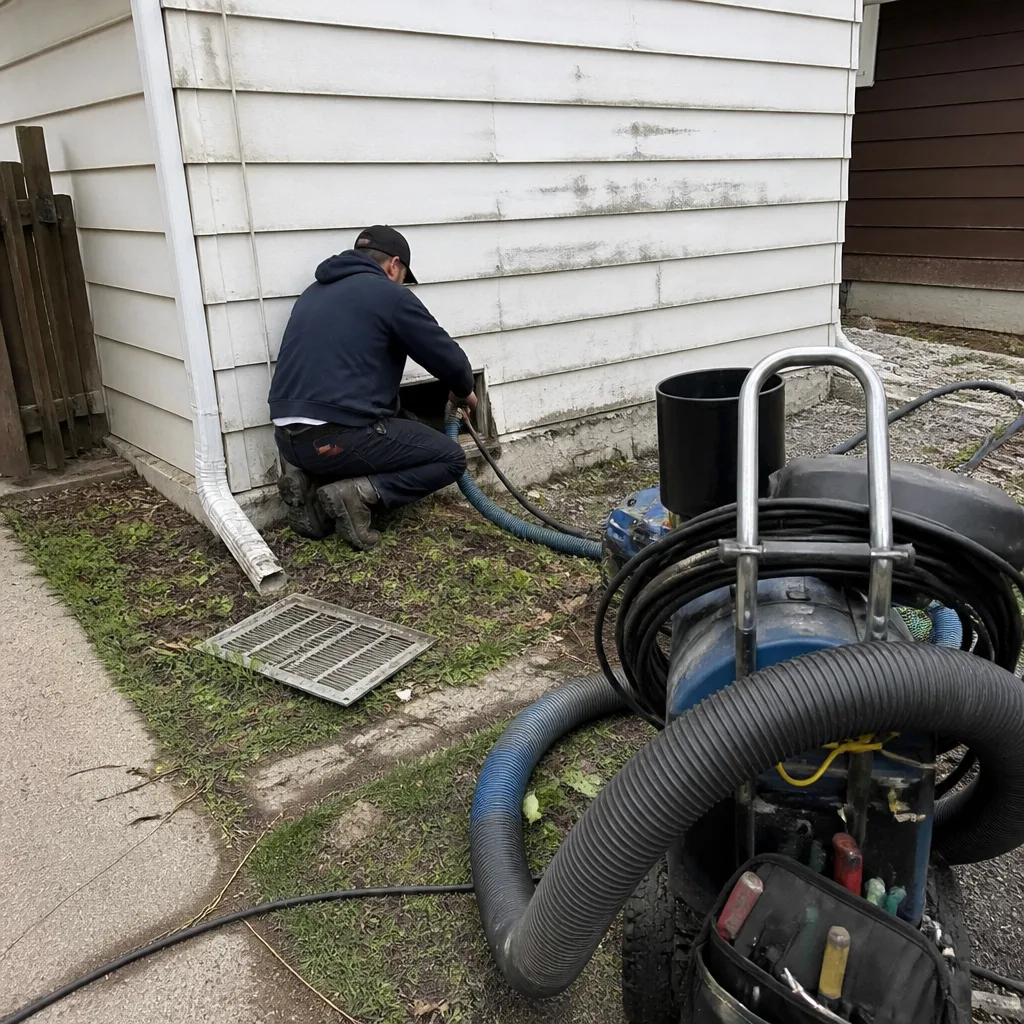 Before
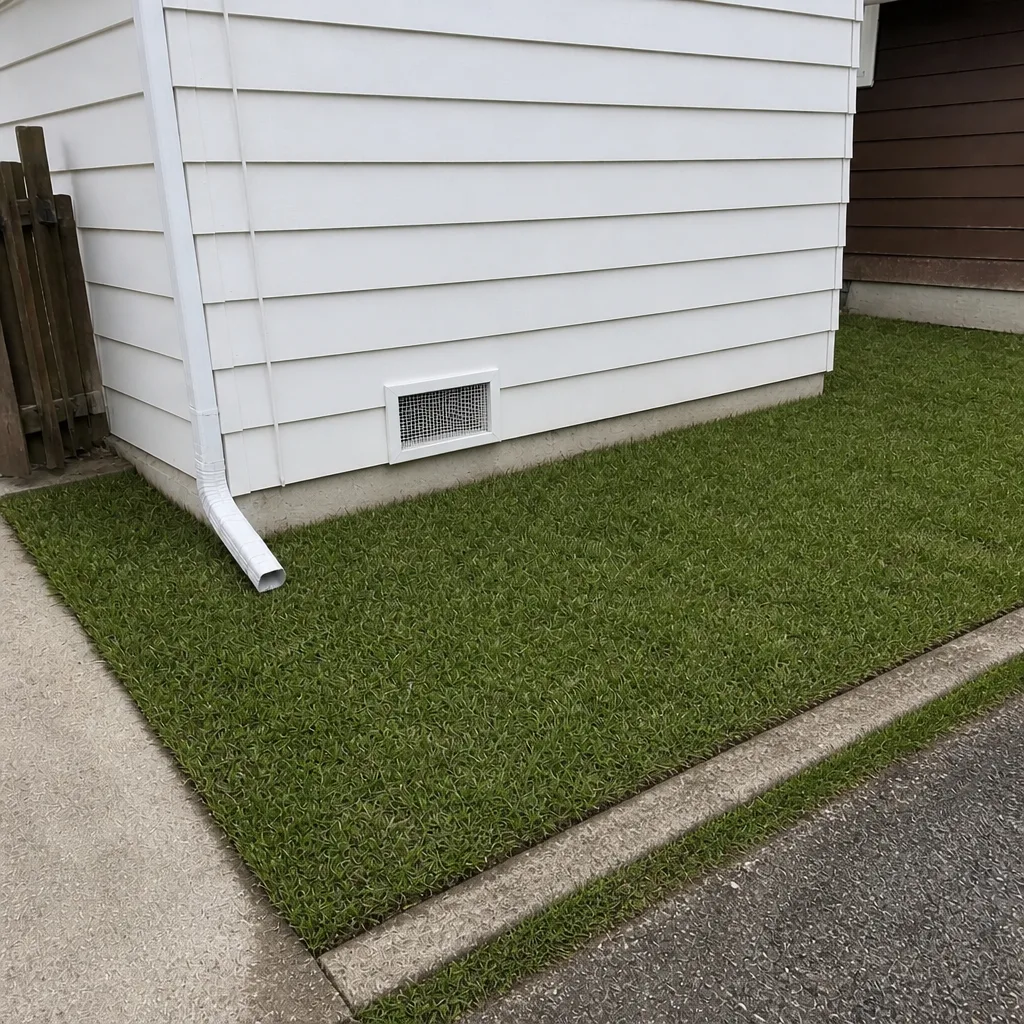 After
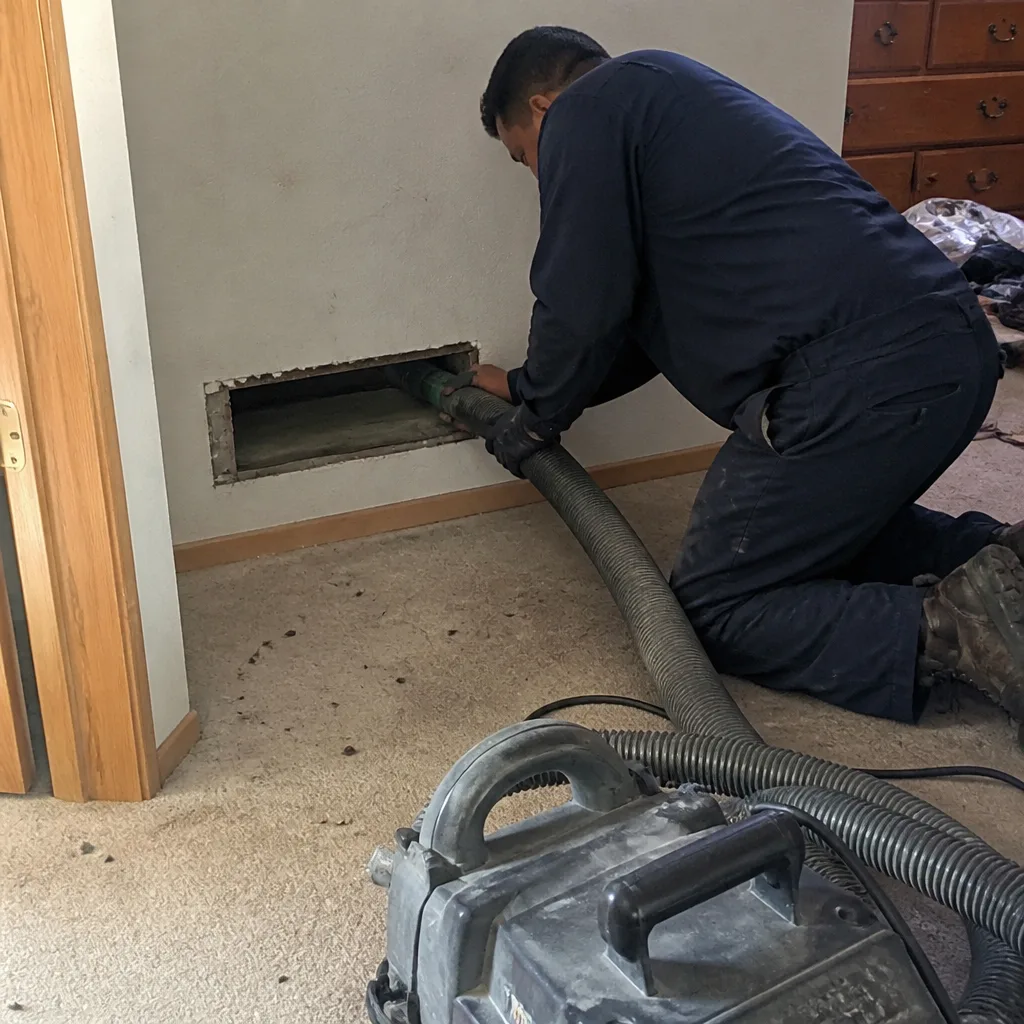 Before
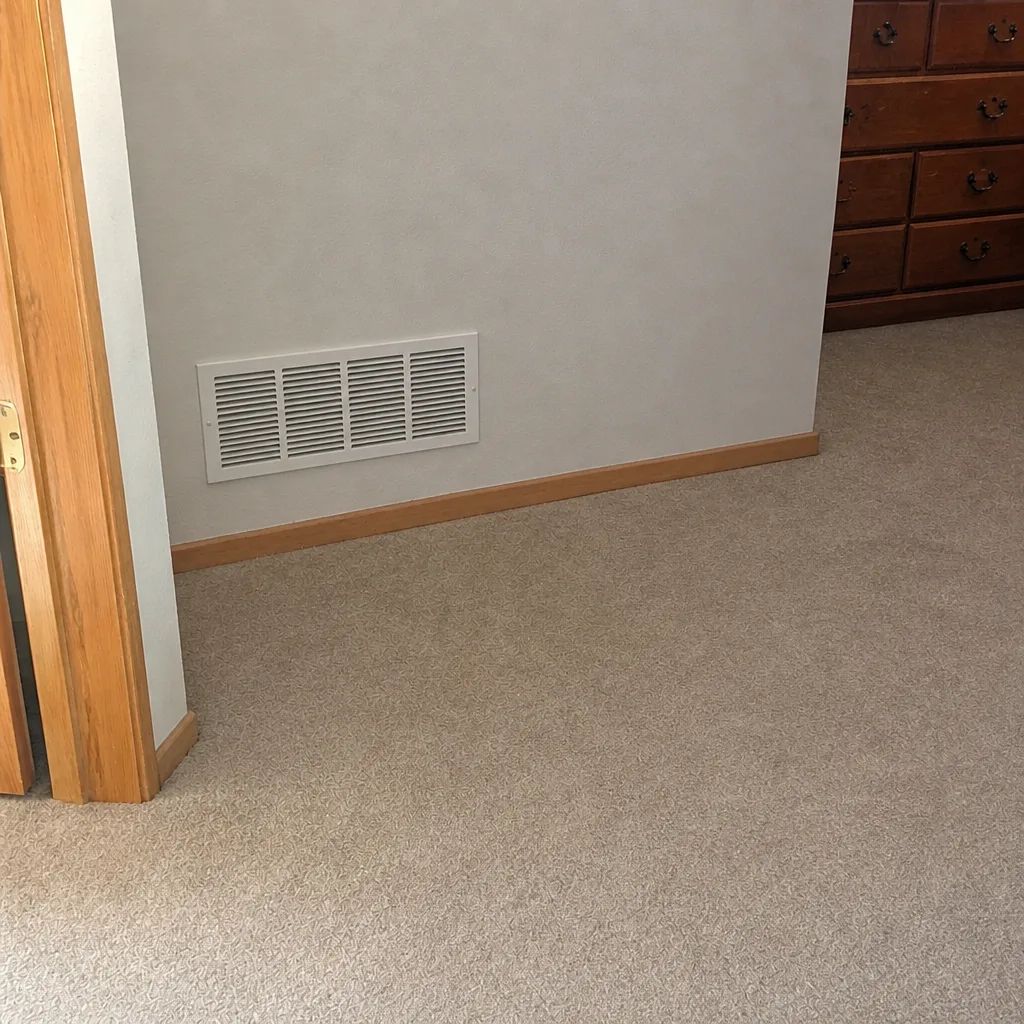 After
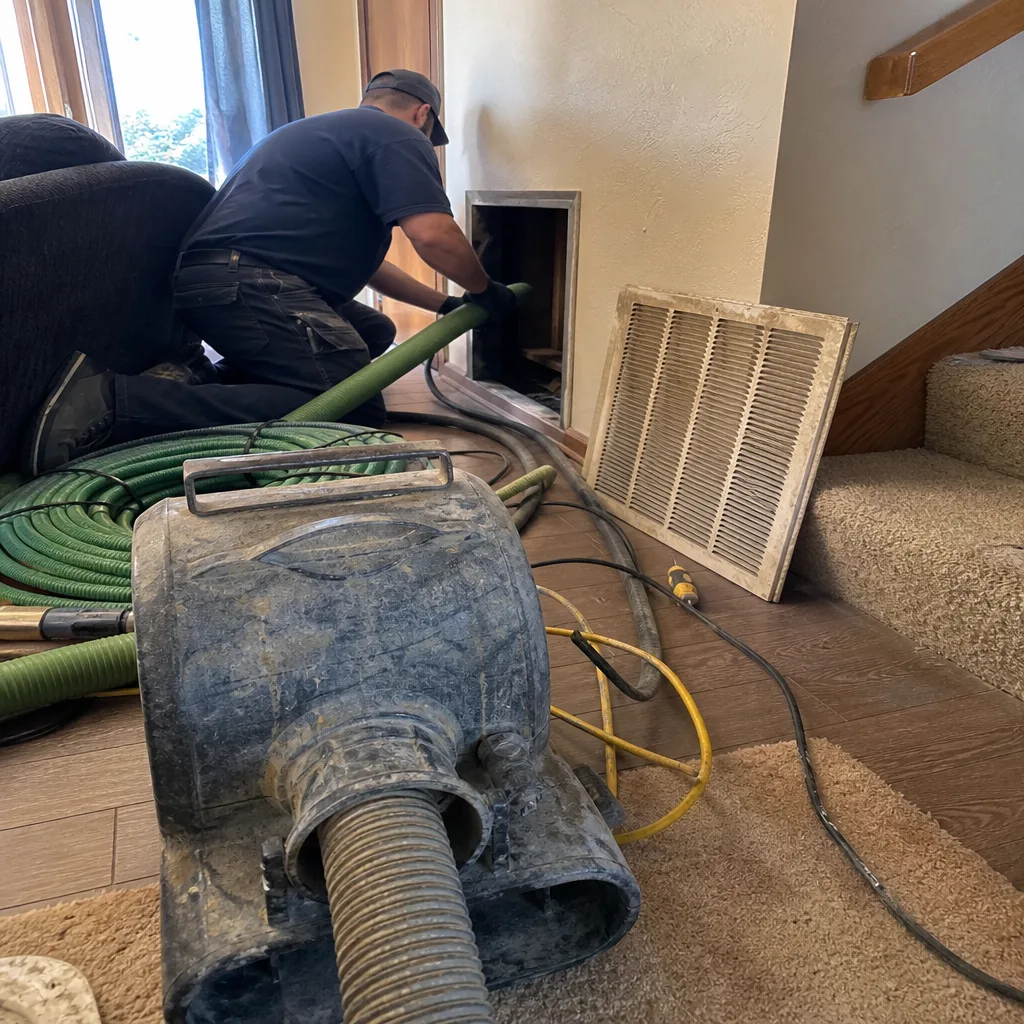 Before
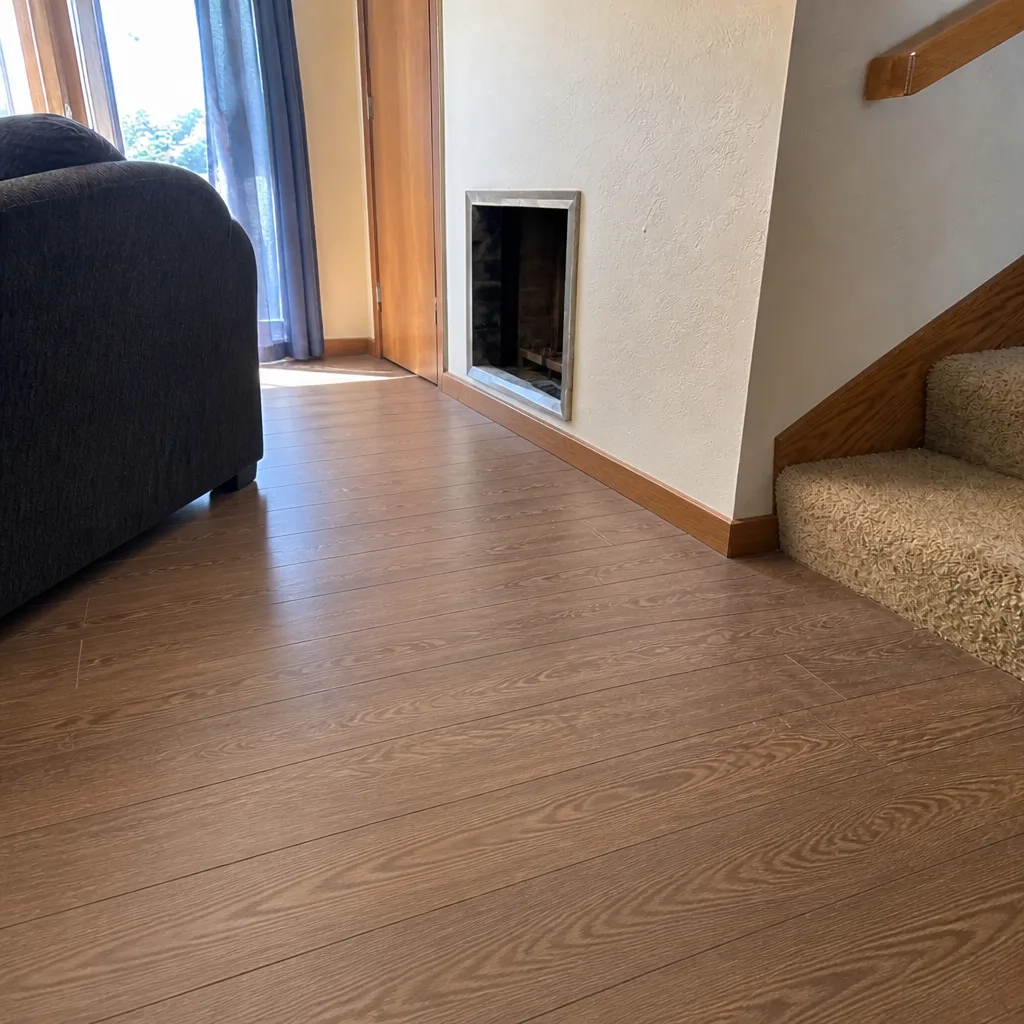 After
When to Call a Professional
Call for a duct cleaning in Arvada if you’re moving into a home with an uncertain cleaning history, after a renovation that generated fine dust and construction debris, or if you’ve noticed visible dust at the registers, musty odors when the system runs, or an allergy season that seems worse than usual. If your dryer vent hasn’t been checked in more than a year, or if the outside flap doesn’t open freely, that’s a reason to call. If you have pets and the air handler filter is filling faster than it used to, a full-system inspection is worth booking. If your system covers multiple air handlers and you don’t know how many you have, a technician can confirm that during the estimate.
Arvada Air Duct Cleaning Co offers free estimates in Arvada – call (833) 482-6448. The estimate includes a written scope and a flat price per system, so you know what you’re paying before any work starts.
Frequently Asked Questions
A proper whole-house duct cleaning in Arvada is priced per system, not per vent, and the estimate sets the final price. The range you see depends on the number of systems, how many runs each system has, whether the air handler is included, and whether duct repair or dryer vent cleaning is added. The important thing isn’t the starting number – it’s what the written scope includes. A low per-vent quote can look cheaper at the start and end up costing more once every line is totaled. Call (833) 482-6448 for an exact quote – the estimate is free.
Cheap quotes are usually missing one or more core elements of the job: the return runs, the air handler, additional systems, or the dryer vent. Some are priced below the legitimate cost of labor and fuel, which means the shortfall has to be recovered through an upsell once the technician is in the home. The only meaningful comparison is scope against scope. Ask every contractor for a written line item list, then compare like for like. Call (833) 482-6448 for an exact quote – estimates are free.
You know because you received before-and-after photos of your own ducts, not stock images, along with the written summary of work performed. A proper completion package also includes any camera footage captured inside the runs. Ask for the photos before work starts, and review them during the final walkthrough. A contractor who agrees up front and shows you the images on the spot is one you can trust. Call (833) 482-6448 to book an estimate.
There’s no fixed interval. For most Arvada homes, a cleaning is worth scheduling every few years, or sooner if you’ve just had a renovation, moved into a home with unclear history, or have pets that shed heavily. If you notice visible dust at the registers, consistent musty odors, or worsening allergy symptoms indoors, the interval should shrink. A camera inspection during the estimate can tell you whether the system actually needs cleaning now. Call (833) 482-6448 to schedule a free assessment.
Most cities require a permit for certain kinds of ductwork modifications, particularly where structural changes are involved, so it’s worth asking your contractor whether the specific repair requires one. Sealing leaks and reconnecting a flex run are typically straightforward; replacing major sections of ductwork or altering an air handler may fall under a different rule. A contractor who works in Arvada regularly knows the city’s building department process. Call (833) 482-6448 and ask about your specific job.
No, not meaningfully, and you shouldn’t try inside the air handler. A shop vac doesn’t generate enough suction to dislodge dust bonded to the walls of a long run, and working inside the blower compartment without training can damage the equipment or create a safety hazard. What you can do at home is keep a clean filter in the return, check the outside dryer vent flap for free movement, and note any musty smell or visible dust at the registers. Leave the interior work to a trained technician. Call (833) 482-6448 to book a cleaning.
The Bottom Line
Screen Arvada duct cleaners on technical capability first, price second. Ask the five equipment questions – truck-mounted or portable, CFM, brush system, camera, negative pressure setup – and don’t accept vague answers. Confirm the contractor follows NADCA’s ACR standard, not just a friendly BBB rating. Get a written scope listing every supply run, return run, the air handler, all systems, and any duct repair or dryer vent cleaning in one flat price per system. Confirm the company actually works in Arvada and can show you a recent local job. Then review the before-and-after photos of your own ducts before you sign anything. A contractor who passes all of that is worth the invoice. A contractor who doesn’t pass is not.
If you’d like to start with an estimate, Arvada Air Duct Cleaning Co handles the full scope from the duct opening to the air handler, including duct repair and sealing, air quality sanitizing, and dryer vent cleaning on the same visit. Our technicians have up to 10 years of experience, and we use professional-grade equipment from Rotobrush, Nikro, and Abatement Technologies. Call (833) 482-6448. We answer 24/7. Fast dispatch from 7am to 7pm, Sunday through Friday. The estimate is free, and every system is priced flat before work starts. You can also learn more about Arvada Air Duct Cleaning Co and the full range of services we connect homeowners with.
Written by the team at Arvada Air Duct Cleaning Co.