
Last updated November 23, 2026
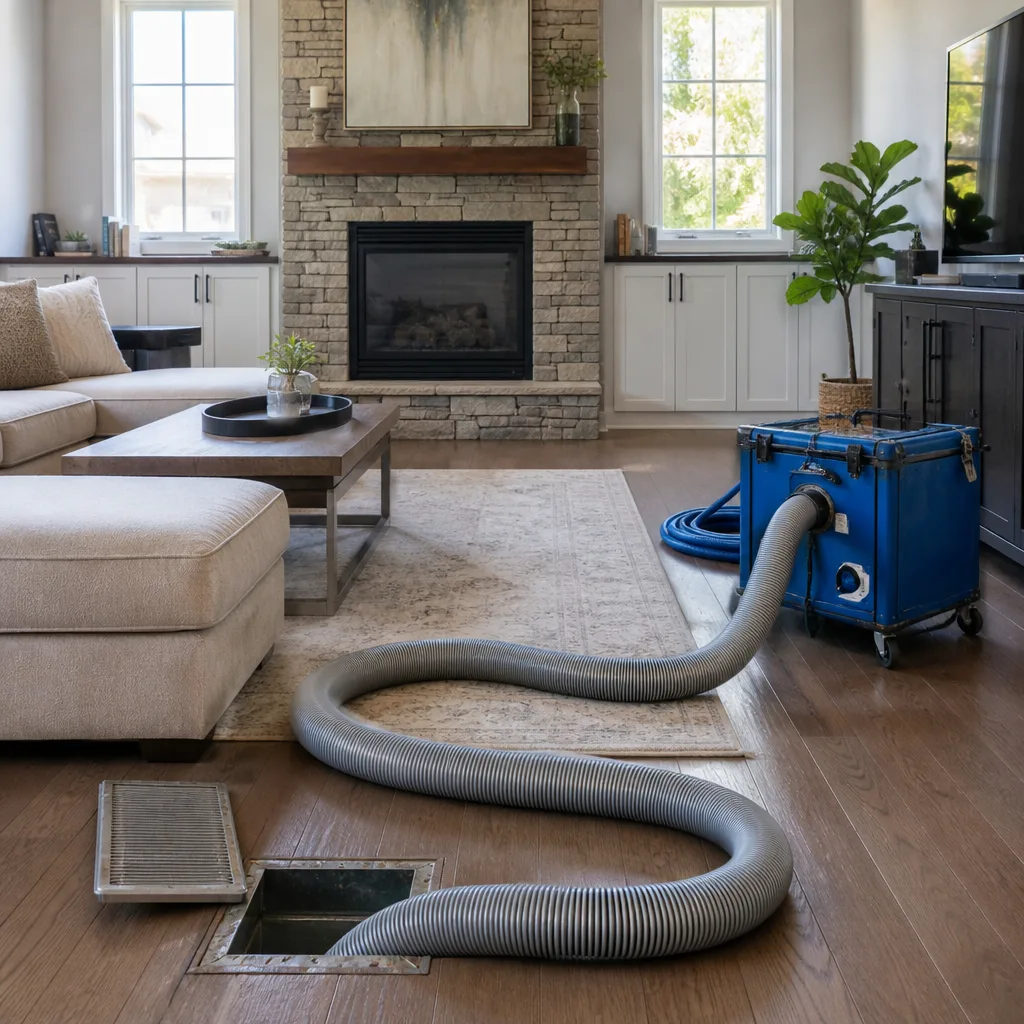 Whole-home duct cleaning
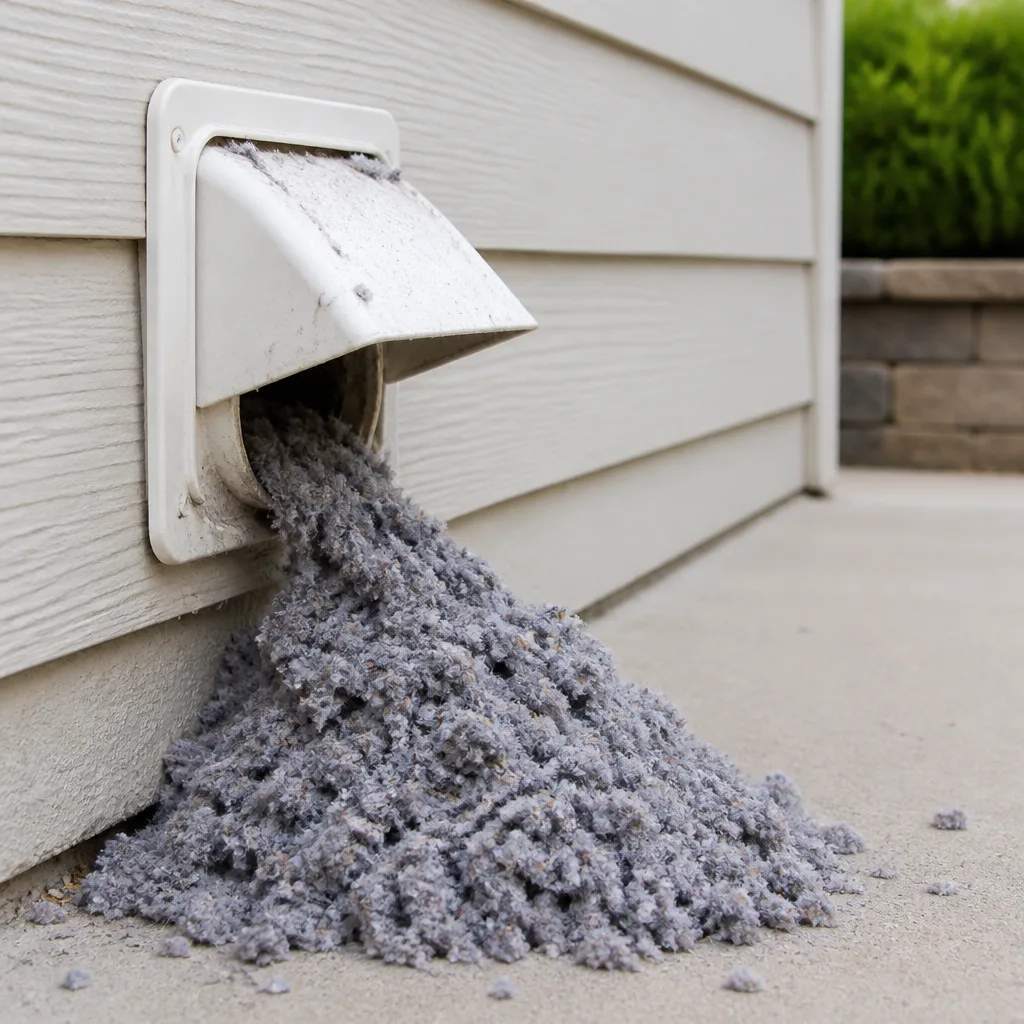 Dryer vent cleaning
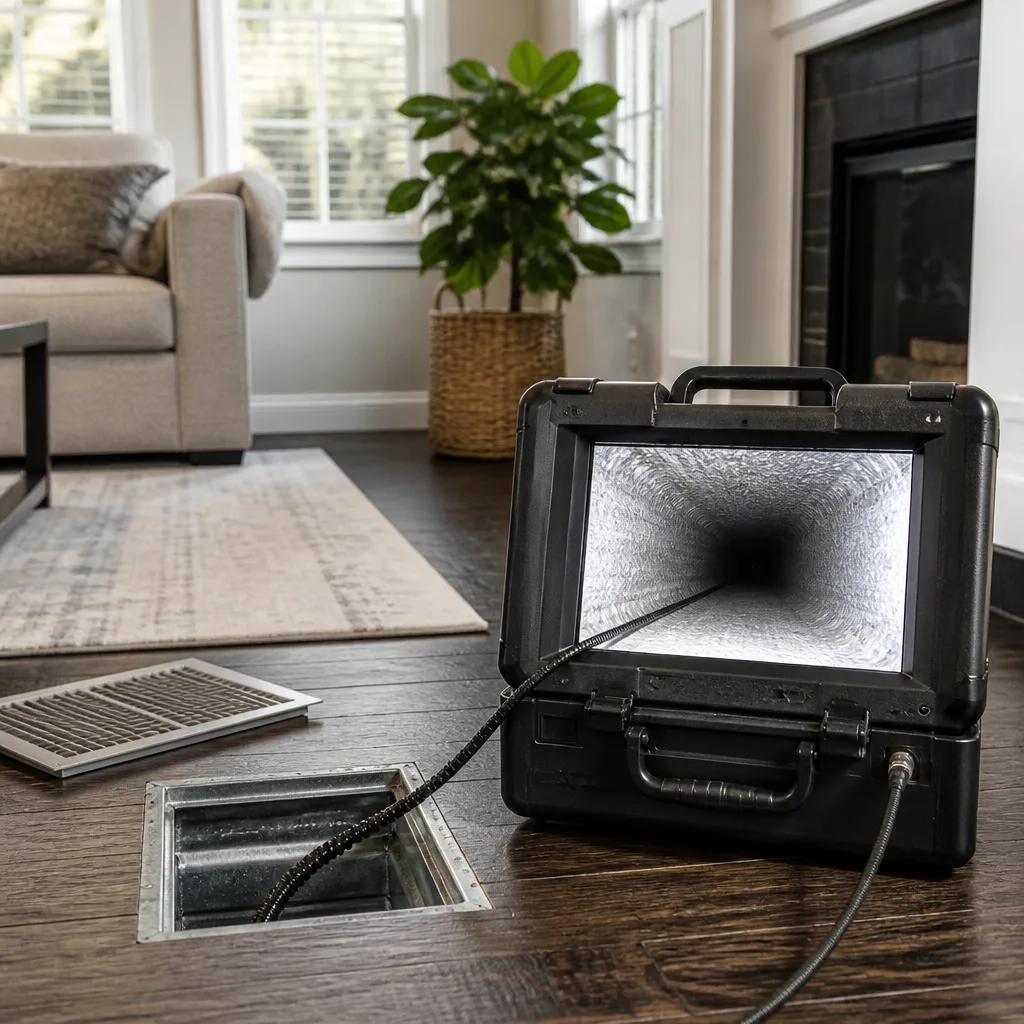 Camera inspection
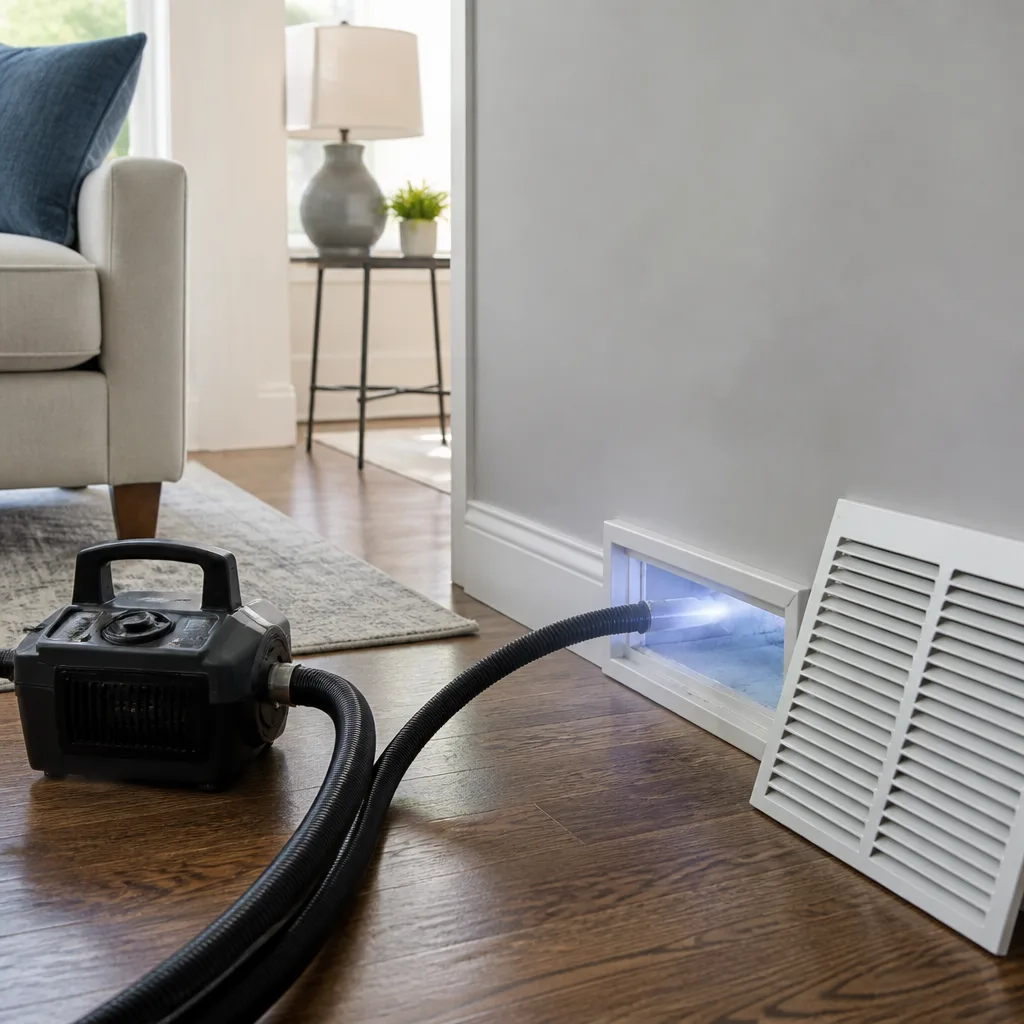 Sanitizing & deodorizing
Whole-system duct and dryer vent check with before-and-after photos - you see exactly what came out of your vents
That "$99 whole-house special" is a bait ad - the real number appears once they are in your hallway, or the "clean" is a shop-vac at the register. We photograph the inside of your ducts before and after instead.
Air Duct Cleaning Maintenance Checklist for Arvada Homeowners
If you replace your MERV 11 filter every 90 days but leave your return grilles caked with dust and your dryer vent partly clogged, you’ve offset most of what a professional cleaning accomplished within a single heating season. That’s the part most Arvada homeowners miss: cleaning is one step inside a rhythm, not a one-time event. Contamination doesn’t arrive all at once. It builds every time the system cycles, every time a dog shakes off on the rug, every time a windstorm pushes Front Range dust through a loose return boot. What follows is the maintenance checklist we walk homeowners through in Arvada, month by month and season by season, with the reasoning behind each interval so you can adapt it to your own house.
Quick Answer
A practical air duct maintenance checklist in Arvada runs on three clocks: monthly tasks like filter checks and return grille inspection, quarterly tasks like flex duct connection checks and dryer vent cap clearing, and annual professional work that includes full-system duct cleaning, dryer vent cleaning, and an HVAC component inspection. Filter rating strategy should shift with the season, running lower-MERV media in summer and stepping up during smoke events and winter heating months. The rhythm matters more than any single task, because skipping the small checks is what accelerates recontamination between professional cleanings.
Styles & brands we work with
- Whole-home duct cleaning
- Dryer vent cleaning
- Camera inspection
- Sanitizing & deodorizing
Table of Contents
- Why Duct Maintenance Is a Rhythm, Not an Event
- The Monthly Checklist: Fifteen Minutes That Protect a Season
- The Quarterly Checklist: Connections, Caps, and Boots
- The Annual Checklist: What Belongs in Professional Hands
- Filter Selection for Arvada Conditions: Altitude and Wildfire Smoke
- Self-Inspection Between Visits: Returns, Boots, and Flex Duct
- Dryer Vent Checks That Affect Your Indoor Air
- Keeping a Maintenance Log That Actually Helps
Why Duct Maintenance Is a Rhythm, Not an Event
A duct system is a loop. Air leaves the air handler, travels through supply trunks and branch runs, spills into rooms, and returns through grilles and return ducts back to the furnace or air handler to start again. Every pass carries whatever particulate is suspended in the house, and whatever the return grille fails to catch settles on duct walls, register vanes, and the fins of the evaporator coil. Cleaning that loop resets the baseline. It does not hold the baseline indefinitely, because the sources keep producing: skin cells, pet dander, cooking aerosol, pollen drawn in through the return, dust from the dirt and gravel that Front Range wind lifts off open ground.
This is where most homeowners lose ground. A thorough cleaning in October followed by twelve months of neglect leaves a system that’s visibly dusty again by the next fall. The homeowner concludes the cleaning didn’t work. What actually happened is that recontamination had no counterweight. Small checks in between are that counterweight.
Arvada homes have a few characteristics worth naming. Many were built in the mid-century decades with rigid galvanized trunk lines and short flex branches to the registers, and the flex sections are the first to sag, kink, or pull loose at the collar. Newer construction on the west side of town often runs longer flex runs through unconditioned attic space, which is more exposed to temperature swing. And the whole metro sits at altitude, where the air is thinner and filter pressure drop behaves differently than it does at sea level. None of that changes the checklist structure. It changes the emphasis.
For a deeper explanation of what a full professional cleaning actually involves from the duct opening to the air handler, our air duct cleaning page walks through the equipment and the sequence.
The Monthly Checklist: Fifteen Minutes That Protect a Season
The monthly list is short on purpose. These tasks are about catching changes early, not about doing the deep work. Fifteen minutes once a month keeps you ahead of the two failure modes that quietly undo a professional cleaning: a loaded filter and a leaking return.
- Look at the filter, don’t just schedule it. Hold it up to a light. If you can’t see light through it, it’s done, regardless of what the calendar says. A filter that’s visibly gray across the whole face is loading evenly, which is good. One that’s gray in a stripe and clean at the edges is telling you something about airflow distribution.
- Run a finger along the return grille vanes. Light dust film is normal. A felt-like buildup means the return is pulling more particulate than the filter can handle, and it’s worth checking the filter fit and the grille seal.
- Check the register nearest the air handler. The first supply register off the plenum sees the highest velocity and shows problems first. If it’s dusty while the far registers are clean, the issue is upstream, near the equipment.
- Peek at the dryer lint trap housing. Not just the screen, the slot it slides into. Lint packs into the housing edges and bypasses the screen entirely.
- Listen at each return for whistling. A whistle means a restriction or an undersized return, and both push the system to pull air from unintended gaps.
Record the date and what you saw each month. Photos on your phone are enough. The point is comparison: a grille that looked the same in March and September is stable, and one that’s visibly worse is a signal to look harder at the source. We’ve seen this habit catch undersized return ductwork years before it would have shown up as an equipment problem.
The Quarterly Checklist: Connections, Caps, and Boots
Quarterly tasks reach a little deeper. They’re still visual, and they still don’t require tools beyond a flashlight and maybe a step stool. What they do require is understanding what a healthy connection looks like.
- Flex duct at the collar. Where a flexible branch run meets a rigid trunk or a register boot, there should be a tight connection secured with a tie and sealed. A visible gap, a slipped tie, or a run that’s sagging more than a gentle curve all mean air is escaping before it reaches the room.
- Register boots. Reach up and feel around the boot where it meets the drywall or subfloor. Any gap between the boot and the finished surface is a direct path for attic or crawl space air into the living space. In Arvada, where a lot of homes have unconditioned attic space above the ceiling, that gap matters.
- Dryer vent exterior cap. Go outside and look at the flap. It should open freely when the dryer runs and close when it stops. A flap that’s stuck open invites birds and weather. A flap that’s jammed shut forces lint to back up into the run.
- Condensate and drain lines in cooling season. A quarterly glance for standing water or algae growth near the air handler catches drainage problems early.
- Return air path. Confirm nothing has been stacked in front of a return grille in a closet or hallway. Blocked returns are the most common self-inflicted airflow problem we find.
If you find a sagging flex run or a disconnected boot, that’s a repair, not a cleaning task. Duct repair and sealing belong with the cleaning work because a leaky system defeats the purpose of either one done alone. We cover the sealing side on our HVAC cleaning page.
The Annual Checklist: What Belongs in Professional Hands
Once a year, the system needs work that homeowner inspection can’t accomplish. Professional equipment does the job not because the tasks are complicated to describe, but because the machinery reaches places a vacuum hose from the hardware store won’t, and because proper containment keeps what’s loosened from ending up in your living room.
- Full-system duct cleaning. Mechanical agitation through the runs, negative pressure to hold loosened debris in the system, and containment so the debris leaves the house rather than settling on your furniture. The professional-grade equipment brands we use, including Rotobrush and Nikro for mechanical cleaning and Abatement Technologies for containment and filtration, are the same tools commercial and restoration contractors rely on.
- Air handler and coil inspection. The evaporator coil and blower wheel collect a film that restricts airflow and can support microbial growth. Verify it.
- Dryer vent cleaning. A dedicated cleaning of the full run, not a lint trap wipe. We treat this as a core service because the fire risk is real and the efficiency loss compounds.
- Duct repair and sealing. Any gaps found during cleaning get sealed. Cleaning a system and leaving it leaky is half a job.
- Air quality sanitizing. A Guardsman treatment after debris removal addresses bacteria, mold spores, and odors, which protects the work that was just done rather than layering on top of contamination.
- Filter strategy review. Confirm the current MERV rating still matches the season and the household.
For the dryer side specifically, our dryer vent cleaning page explains why the run length and the number of elbows in your house change the interval.
Filter Selection for Arvada Conditions: Altitude and Wildfire Smoke
Filter rating is the single most misunderstood lever in home air quality. Higher MERV is not automatically better. Every filter trades particulate capture against airflow resistance, and the right balance changes with the season here.
- What MERV actually measures. MERV ratings describe the percentage of particles in a given size range a filter captures. Going from MERV 8 to MERV 11 captures noticeably more fine particulate. Going well beyond that captures more still, but at a pressure cost the blower has to absorb.
- Why altitude changes the math. Arvada sits around 5,300 feet. Air is less dense up here, so the blower moves a different mass of air for the same volume, and a filter that would be fine at sea level can contribute to a system running at higher static pressure. Homeowners who jump straight to the highest MERV they can find sometimes notice weaker airflow at the far registers before they notice cleaner air.
- Wildfire smoke season. When smoke settles over the Front Range, stepping up one MERV tier for the duration of the event makes sense, provided your system can handle it. Change it back when the smoke clears. Running a high-MERV filter year-round “just in case” usually costs more in airflow than it gains in capture.
- Heating season. Winter runs the furnace hard for months. A filter that’s slightly under-rated but changed on schedule beats an over-rated one that’s left in too long.
- Household factors. Pets, recent renovation dust, and young children all argue for a higher capture tier during the relevant period. Households with allergy sufferers often do better with consistent mid-range filtration plus a sealed system than with maximum filtration and leaks.
Filtration and duct sealing work together. A MERV 11 filter on a system with leaking return boots is doing less than a MERV 8 filter on a sealed system. That’s the core argument for addressing both. If you want the filtration analyzed alongside the ductwork, our team in Arvada can look at both in one visit.
Self-Inspection Between Visits: Returns, Boots, and Flex Duct
Between professional visits, you’re the first line of detection. What you’re looking for is change, not perfection. A system that’s been cleaned and sealed and maintained properly will still show a light dust film on return grilles. What it shouldn’t show is buildup.
Return grilles. Remove the grille face and look at the duct behind it. Light dust on the vanes is fine. A visible coating on the duct wall behind the grille, especially near the air handler, means debris is accumulating faster than the filter is catching it. Check whether the grille is actually sealed against the drywall; a loose grille frame lets unfiltered air straight into the return.
Register boots. The boot is the sheet metal transition between the duct and the room. Many Arvada homes have boots that were never sealed to the subfloor, or were sealed with tape that has since dried and failed. Look for daylight, feel for air movement around the edges while the system runs, and note any boot that’s loose in its opening.
Visible flex duct connections. Where you can see flex duct, usually in a basement, garage, or attic access point, check the collar at each end. Flex should run as straight as the layout allows, with gentle curves rather than sharp bends. A crushed or kinked section starves that branch and pushes more air through the others. Any connection that’s pulled apart, even slightly, needs sealing.
We use Abatement Technologies containment equipment during cleaning specifically so that what gets loosened stays in the system until it’s removed. The inspection work you do between visits is what tells you when that cleaning is due.
Dryer Vent Checks That Affect Your Indoor Air
Dryer vent maintenance gets filed under appliance care, which is the wrong drawer. A clogged dryer vent is a fire hazard, and the National Fire Protection Association flags dryer vent cleaning as critical home maintenance for exactly that reason. But it’s also an indoor air quality issue. Lint that can’t escape the run backs up into the dryer housing and into the laundry room air, and moisture that should vent outside instead raises indoor humidity, which is its own problem in a home’s air profile.
The lint trap you clean every load catches a fraction of the lint the dryer produces. The rest travels into the vent run itself. Short, straight runs to an exterior wall clear slowly. Long runs with multiple elbows, which are common in Arvada homes where the dryer sits far from an exterior wall, accumulate much faster.
Monthly, check the lint trap housing edges and the exterior cap flap. Quarterly, run the dryer and step outside to confirm the flap opens and air moves freely. Annually, have the full run cleaned, which is a separate operation from duct cleaning and reaches the full length of the vent. If you notice clothes taking longer to dry or the dryer feeling hot to the touch, the run is restricted and cleaning shouldn’t wait for the annual date. Signs of trouble are worth acting on early. We treat dryer vent cleaning as part of the core service menu for that reason; it’s short work that addresses a real hazard.
Keeping a Maintenance Log That Actually Helps
A maintenance log sounds like busywork until the next technician asks when the grilles started looking dusty. Then it’s the difference between a diagnosis and a guess.
What’s worth recording:
- Dates. Every filter change, every professional visit, every repair. A simple note in your phone works.
- Filter rating and how it looked when you pulled it. “MERV 11, changed at 88 days, uniformly gray” tells a technician far more than “changed filter.”
- Photos of return grilles and boots on a fixed schedule. The same angle each time. Progression is the diagnostic.
- Any changes to the house. A renovation, a new pet, a new baby, an added room. All of these change the load on the system.
- Dryer dry-time notes. “Towels take 70 minutes now, used to be 50” is a clue about restriction.
- Service records from prior owners. If you bought a home, ask for whatever the previous owner kept. It’s rarely comprehensive, but it’s a starting point.
When a technician arrives with a log in hand, they can spend their time diagnosing rather than asking memory questions. In our experience, the homes with a log get to the right answer faster because the pattern is already visible.
Common Mistakes to Avoid
- Chasing the highest MERV at altitude. A filter chosen for maximum capture without regard for the blower’s pressure budget can starve the far registers, especially in Arvada where the thinner air already changes the equation.
- Cleaning ducts and skipping sealing. A cleaned system with leaking return boots recontaminates faster than a moderately dirty system that’s sealed. The two go together or neither one holds.
- Treating the dryer vent as lint trap plus nothing. The full run needs cleaning, and the exterior cap needs checking. A stuck cap can quietly undo months of good habits.
- Ignoring the return grille because it “always looks like that.” If the grille is loading visibly in a month, the filter isn’t matching the load. That’s a signal about the system, not about how you clean.
- Using the wrong equipment brand of advice. A shop vac at the register with no containment just redistributes dust into the room. Professional cleaning exists because of the machinery that holds particles in the system.
- Skipping the log. Every technician starts from zero without service history. Even a minimal record changes the quality of the diagnosis.
- Waiting for a visible problem. Duct cleaning and dryer vent cleaning are preventive. By the time you see the problem, the interval already slipped.
See the difference
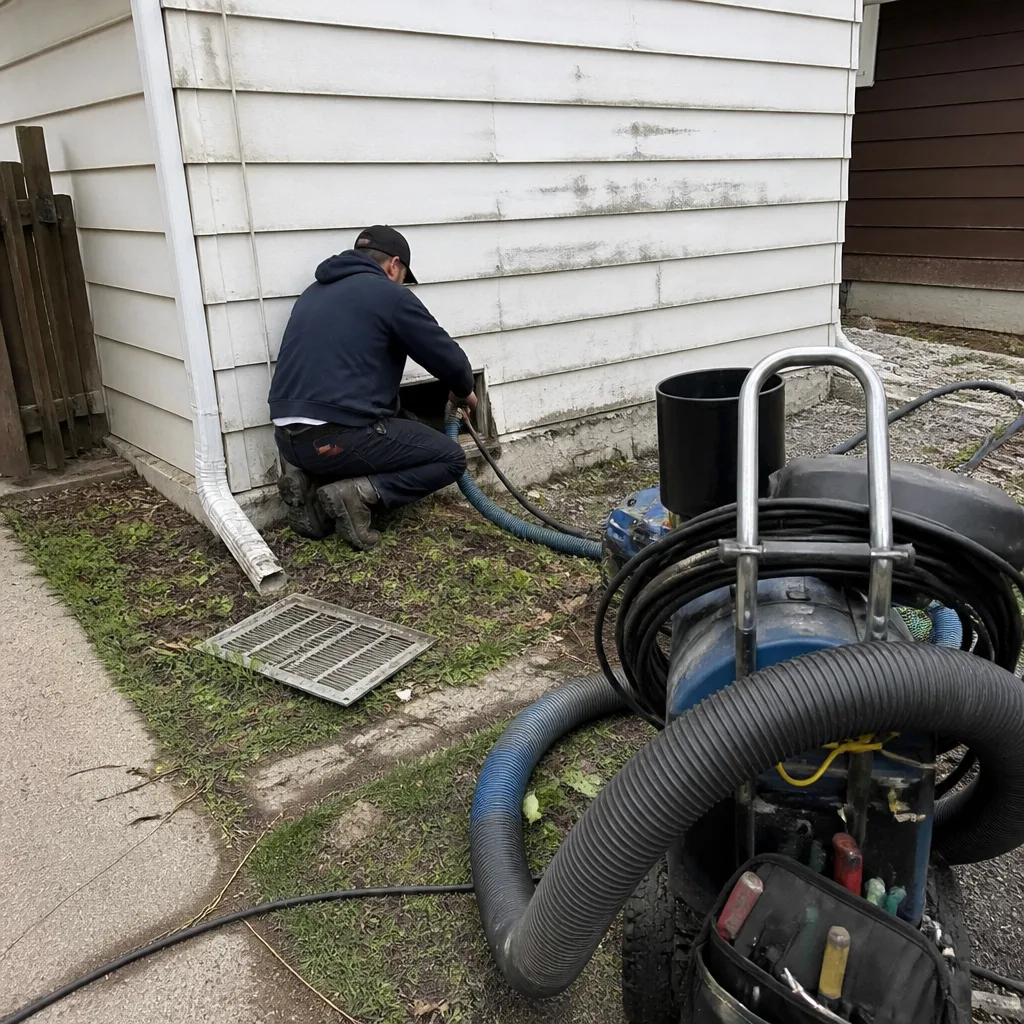 Before
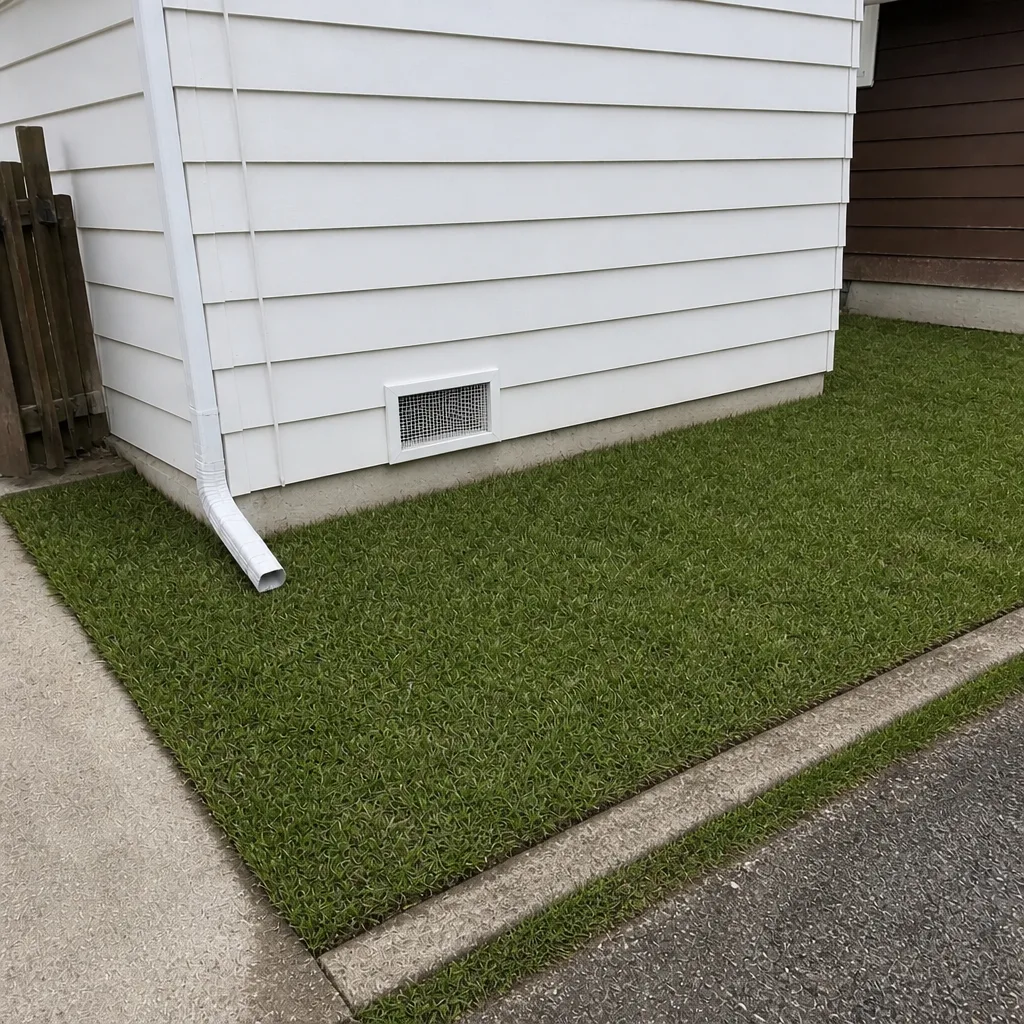 After
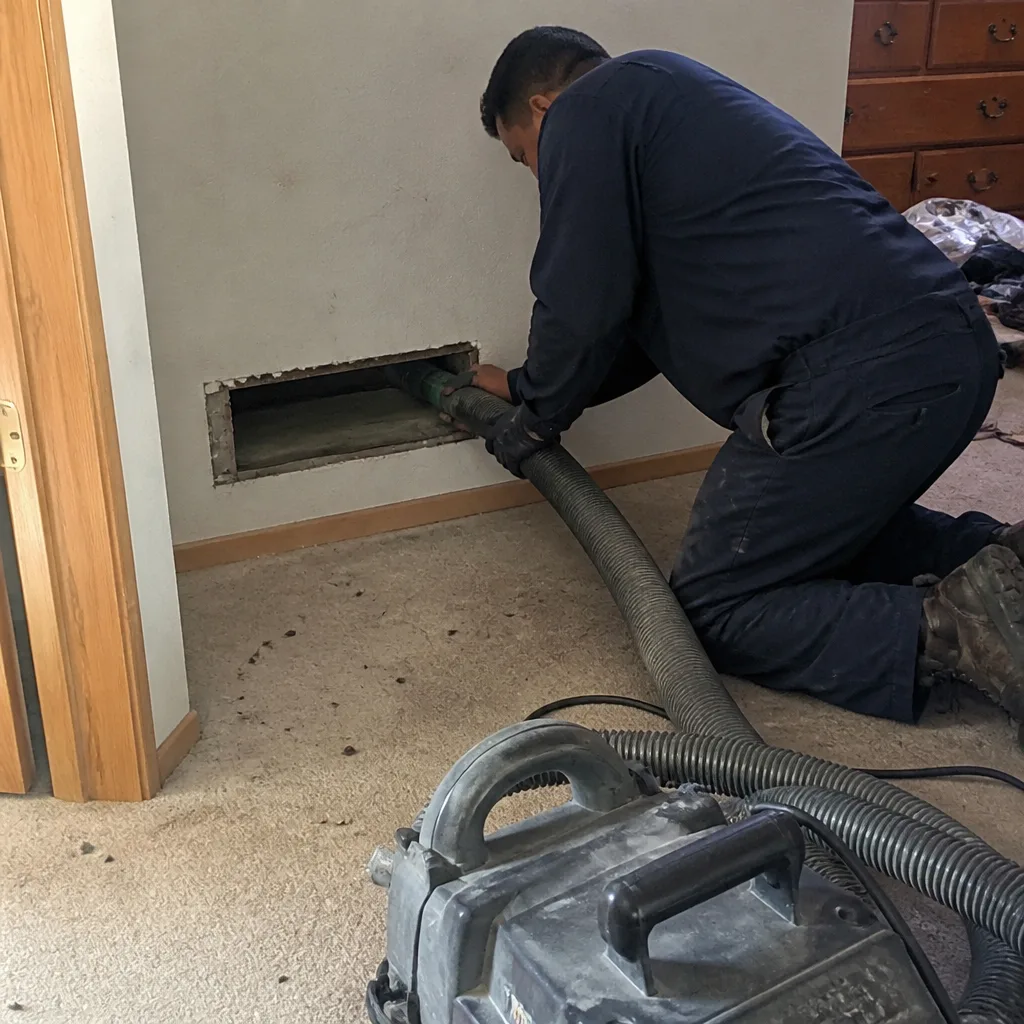 Before
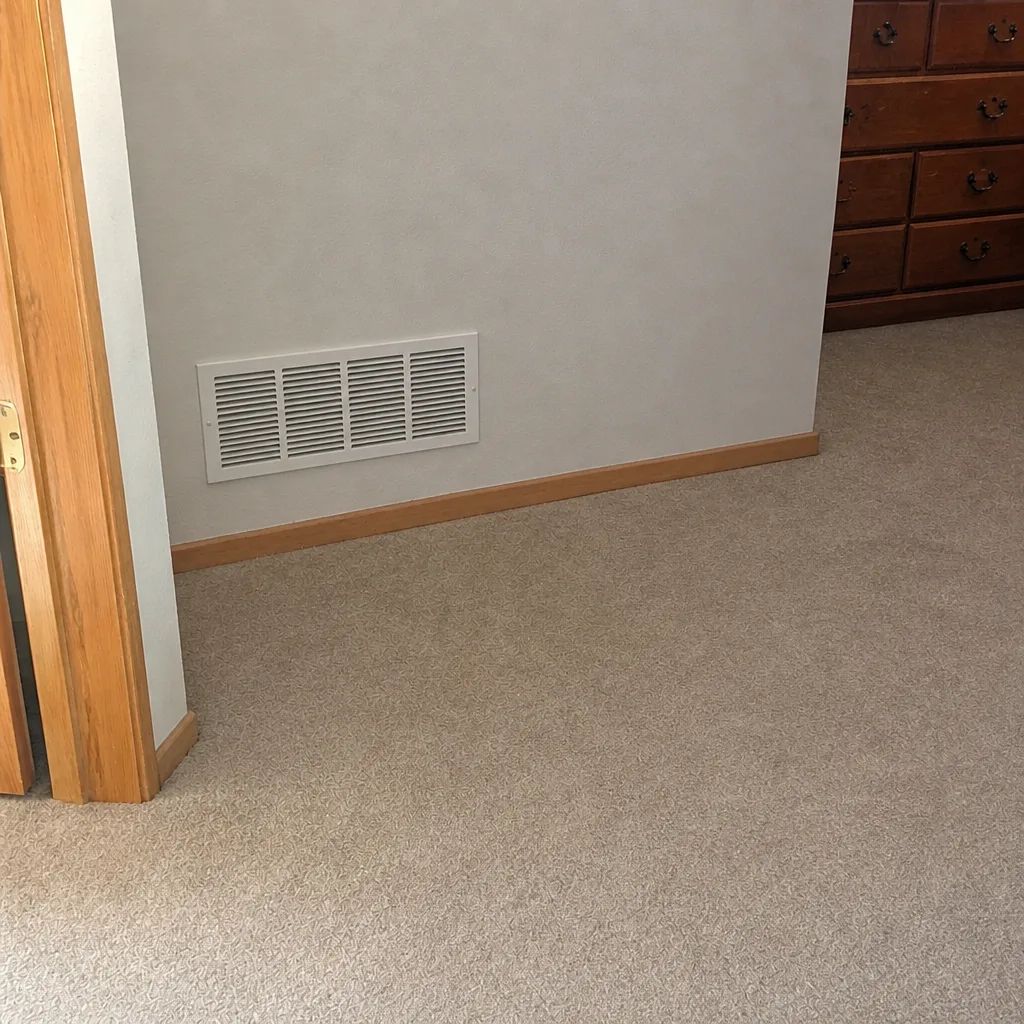 After
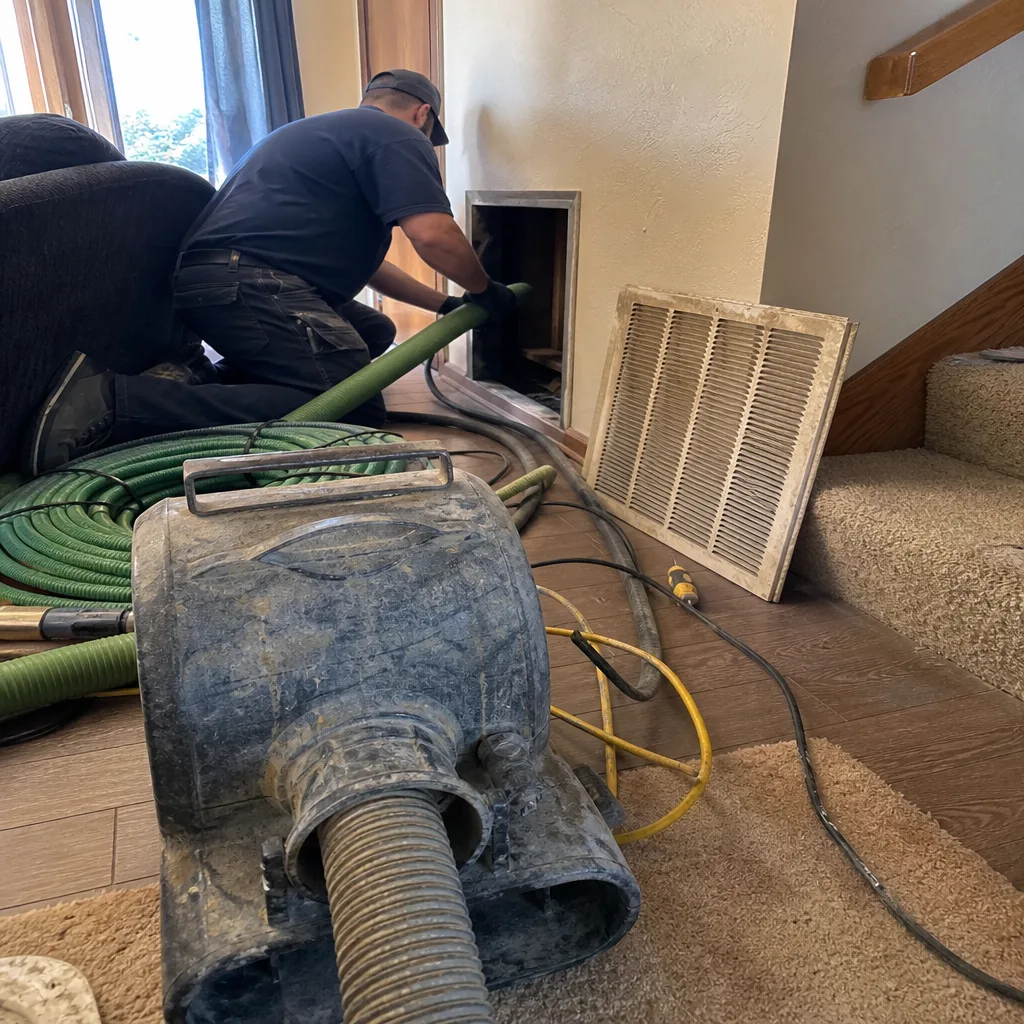 Before
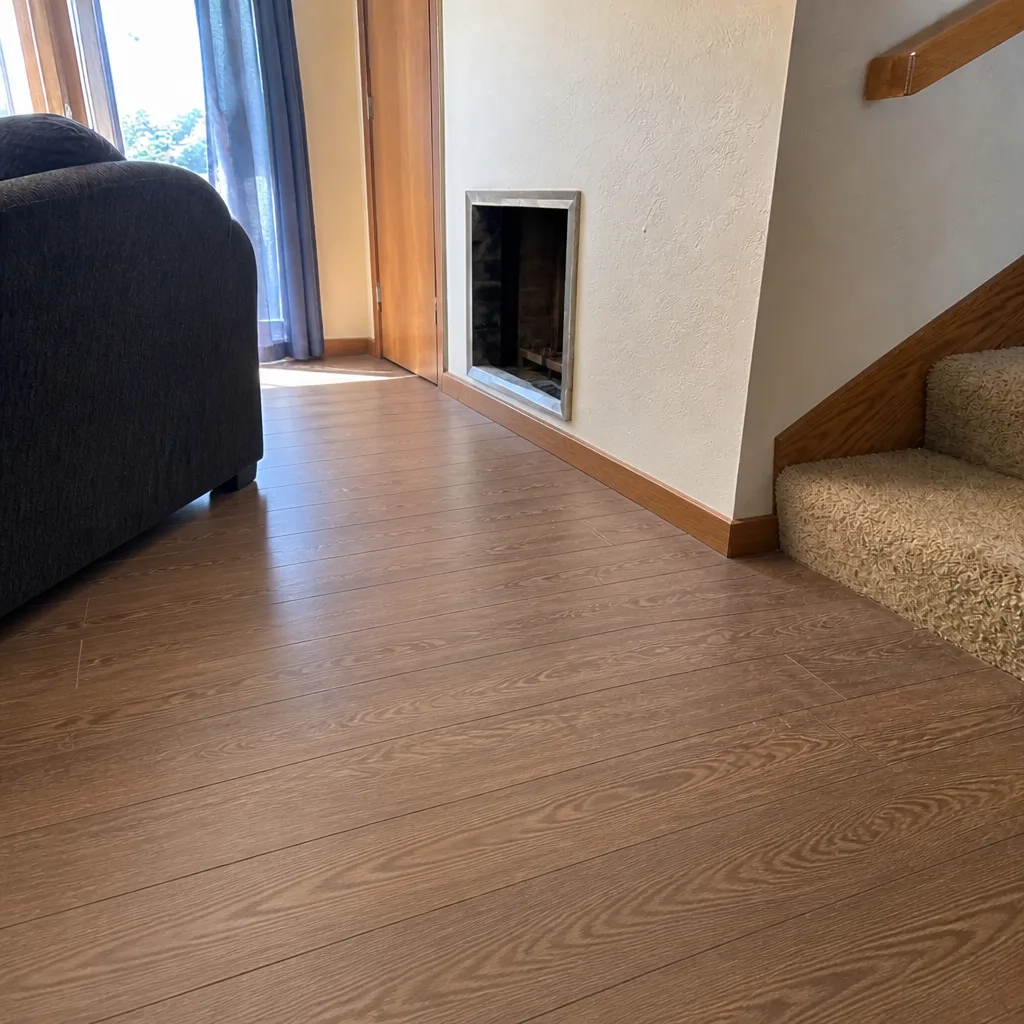 After
When to Call a Professional
Call when the monthly checks start showing pattern change: return grilles loading within weeks of a filter change, a visible gap at a flex collar, or a boot that moves in its opening. Call after a renovation that produced drywall dust and debris. Call when you’ve just bought the home and the service history is unclear. Call when the dryer’s drying time has stretched noticeably or the exterior cap won’t close. And call when the annual date comes around, because the annual tasks are the ones that need the machinery. Arvada Air Duct Cleaning Co offers free estimates in Arvada – call (833) 482-6448. Our technicians have up to 10 years of experience, and we approach the job as a full-system scope: ducts, dryer vents, HVAC components, repair and sealing, and sanitizing, all verified before we consider it complete. We answer 24/7, and fast dispatch runs from 7am to 7pm, Sunday through Friday, so an estimate is never more than a phone call away.
Frequently Asked Questions
Most Arvada homes do well with professional air duct cleaning every two to three years, with dryer vent cleaning annually. Homes with pets, allergy sufferers, young children, or recent renovation may need a shorter interval. The best guide is your own log: if return grilles and boots show visible buildup faster than the general recommendation, move the schedule up.
MERV 11 is a practical baseline for most Arvada homes, with a temporary step up during wildfire smoke events and back down after. The constraint is your system’s airflow, not the filter’s capture rating; if far registers feel weak after a jump in MERV, the blower is working against pressure it can’t afford. Confirm the rating your equipment is rated for before changing.
It shouldn’t, if the cleaning is done with proper containment. Professional equipment including Abatement Technologies filtration keeps loosened debris in the system during cleaning, so the dust that comes loose is captured and removed rather than dispersed into the room. If a cleaner arrives without containment equipment, ask how the dust is being controlled.
Before-and-after photos of your own ducts, taken during the visit, are the strongest evidence. A thorough cleaning will show visible change in the duct runs, return plenum, and register boots. Ask to see the photos as part of the completion check, along with confirmation of sealing work if leaks were found.
Usually because the scope is narrower than described. A single pass with a shop-grade vacuum, no mechanical agitation, no containment, and no sealing is fast and cheap. It also misses most of what a full-system cleaning reaches, which means the interval before recontamination is much shorter. Compare quotes on scope and equipment, not just the headline number.
Annual dryer vent cleaning is the right default, and a shorter interval makes sense for long runs with multiple elbows. Arvada homes with the dryer positioned far from an exterior wall accumulate lint faster than short direct-run setups. Watch drying times as your early indicator.
The Bottom Line
Duct maintenance is a rhythm. Monthly checks catch filter and return problems before they spread. Quarterly checks catch the connection failures that let a cleaned system degrade. Annual professional work does what homeowner inspection can’t reach, with equipment rated for the job. Filter strategy should move with the season, tightened for wildfire smoke and adjusted for the altitude here. And a simple log turns every visit into a better diagnosis. If you want the annual work on the calendar or the sealing and sanitizing done properly, call Arvada Air Duct Cleaning Co at (833) 482-6448 for a free estimate. We answer 24/7. Fast dispatch from 7am to 7pm, Sunday through Friday, closed Saturday.
Written by the team at Arvada Air Duct Cleaning Co.